Alpaca Body Condition Scoring (BCS)
Keeping alpacas on a good plane of nutrition is essential for healthy reproduction as well as minimizing variations in the diameter along the length of the fibre staple. Sudden changes in diet can result in sickness, foetal stress and tender fleece. Seasonal changes in dietary quality and quantity make it essential to monitor your animal’s body condition. Overweight alpacas may be at risk with heat stress, infertility, difficult births, poor lactation and neonatal mortality. Emaciated alpacas can be susceptible to embryonic loss, stillbirths, poor lactation and underweight neonates.
Variations in frame sizes from one alpaca to another means it is not always accurate to compare the weights between individuals. Mature females should weigh between 60-75 kg and males can weigh up to 100 kg. (Averages are 70 kg for adult females and 85 kg for adult males).
The nutritional status and condition of alpacas can be assessed without the need to purchase expensive weighing equipment. Live weight scales will accurately tell you weight changes within individual alpacas. However inaccuracies can occur due to females being in late pregnancy or when there are variations in gut fill between weighings.
Body condition scoring can therefore give a more accurate picture of the animal’s condition allowing you to optimise nutritional management of your alpaca. Visual assessment of the condition of alpacas is often misleading as fleece and later stages of pregnancy can hide their true status. There is no substitute for hands-on appraisal. Body Condition Score is based on a scale of 1 to 5, with alpacas in very poor condition scoring 1 and obese alpacas scoring 5.
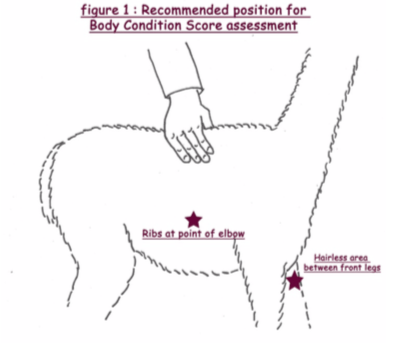
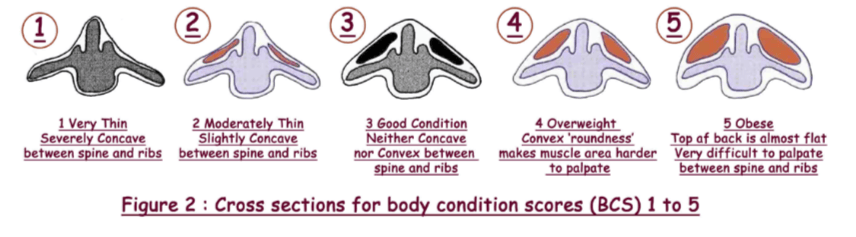
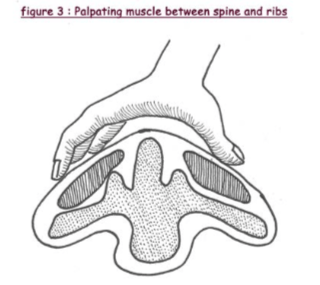
The most commonly used area is over the central backbone near the last ribs. Do NOT make assessment over the pelvis as this area often feels boney, even with obese alpacas. Body scoring involves placing your fingers on the centre of the back, either side of the vertebrae and feeling for muscle coverage. By palpating the area with your fingers and thumb you can make an appraisal of the muscle mass. It should reveal a firm, slightly convex body shape. Bulging would indicate an overweight animal whereas concave tone indicates underweight condition. To confirm your estimate you can also palpate the area over the ribs at the point of the elbow (in an animal with BCS 2.5 you will just feel the ribs; an animal with impalpable ribs is very fat) and finally, observe and or palpate the hairless area between the front legs (see Fig. 1).
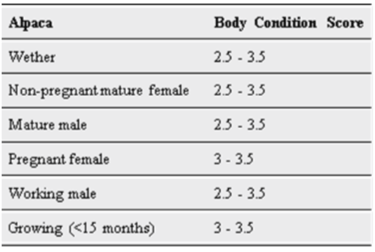
Practicing the technique whenever you handle alpacas will help make your assessments more consistent. Each assessment should not take any longer than about 5 seconds. If a low BCS is only due to a shortage of feed (and is not due to other factors such as ill health) alpacas with unlimited access to good quality pasture can take 3-6 weeks to gain one score.
Disclaimer: The management practices detailed in this overview do not constitute veterinary advice. Any alpaca appearing to have an adverse condition should be assessed by a veterinarian
Information sheet reproduced from the British Alpaca Society.